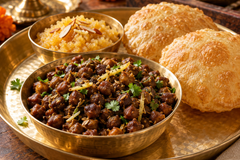
Few childhood mornings began without the smell of ghee warming in the kitchen, especially on puja days when a bowl of suji halwa could make everyone appear before breakfast was even ready. Warm, soft and glossy, it is just as comforting served at home as prasad after a temple visit, during Ashtami or straight from the kadhai with puri.
Some eat it with hot puris; others prefer a spoonful on its own with cashews and raisins garnished over the top. Before the pan goes on the flame, though, it helps to know what goes into that familiar bowl of halwa and why each ingredient matters.
What Is Suji Halwa and Why Is It Made for Prasad?
Suji ka halwa is a simple sweet made by cooking semolina with ghee, sugar and water, along with cardamom or nuts. It is soft, warm and easy to prepare, which is one reason it appears so often in Indian festive meals.
For prasad, its simplicity feels appropriate. It can be cooked fresh in a single pan, served warm and shared easily after puja, whether at home, during Kanjak or as part of a bhog thali.
What Ingredients Do You Need for This Sooji Halwa Recipe?
A basic sooji halwa recipe needs semolina, ghee, sugar and water, with cardamom and nuts for extra flavour.
| Ingredient | Quantity |
|---|---|
| Semolina (suji/sooji) | 1 cup |
| Ghee | ½ cup |
| Sugar | 1 cup |
| Water | 3 cups |
| Green cardamom powder | ½ teaspoon |
| Cashews (chopped) | 2 tablespoons |
| Raisins | 1 tablespoon |
| Saffron strands | A small pinch |
How Do You Roast the Semolina to the Right Golden Colour?
Slow roasting is what gives halwa semolina its golden colour, nutty smell and richer taste.
- Heat the ghee in a heavy-bottomed pan, then add the semolina.
- Keep the flame low to medium and stir often so the grains roast evenly.
- The suji should gradually change from pale cream to a light golden shade.
- Do not rely only on colour. The nutty aroma is another good sign that it is nearly ready.
- Give the roasting some more time rather than turning up the heat. Once the suji looks glossy and golden, it is ready for the next step.
How Do You Make the Sugar Syrup and Combine It Without Lumps?
The easiest way to keep sooji halwa smooth is to add hot sugar syrup gradually while stirring the roasted semolina continuously.
Prepare the Sugar Syrup
Add the measured water and sugar to a separate saucepan and bring it to a gentle boil. Let the sugar dissolve fully. A thin syrup is enough here, so there is no need to cook it until it becomes sticky or thick. Keep it hot while the semolina finishes roasting.
Add the Syrup Slowly
Once the suji has reached the right golden colour, lower the flame and slowly pour in the hot syrup. The mixture will bubble and steam, so add it carefully rather than tipping everything in at once.
Keep Stirring
Use a whisk or sturdy spoon to stir constantly as the liquid goes in. Break up any small lumps straight away. After a few minutes, the semolina will absorb the syrup and turn into a thick, soft mixture.
What Is the Right Ratio of Suji, Ghee and Water for Soft Halwa?
A reliable ratio for soft suji halwa is 1 cup semolina, ½ cup ghee and 3 cups water. This proportion gives the halwa enough moisture to stay soft without turning runny once it cools.
- 1 cup suji gives the halwa its body and keeps the mixture spoonable rather than overly thick.
- ½ cup ghee adds richness and helps keep the cooked halwa tender, especially after it begins to cool.
- 3 cups of water give the semolina enough liquid to swell properly without leaving a dry centre.
- Want a slightly firmer texture? Reduce the water a little.
- A softer serving consistency can be maintained by keeping a small amount of hot water ready while the halwa cooks.
- The final texture also depends on the pan, heat and how long the mixture cooks, so the ratio is a starting point rather than a rigid rule.
Which Flavourings Work Well in Suji Halwa?
Cardamom, saffron and roasted nuts can give Indian semolina halwa a richer aroma without taking away its ghee-roasted flavour. A little goes a long way, so add them near the end rather than letting their taste dominate the halwa.
- Cardamom adds a warm, sweet aroma and works best once the halwa has thickened.
- Saffron can be soaked in warm water or milk and added near the end for gentle fragrance and a golden tint.
- Cashews, almonds and raisins bring some crunch and sweetness. Frying them lightly in ghee first gives a deeper flavour.
How Do You Make Suji Halwa for Kanjak and Ashtami Navami Bhog?
For Kanjak and Ashtami Navami bhog, suji ka halwa is usually made in a simple, mildly sweet style that is easy to portion and serve. Keep the batch fresh and make enough to serve alongside puri, kala chana or other foods included in your family's bhog tradition.
Keep the Bhog Simple
Skip heavy garnishes and let the halwa remain soft, fragrant and easy to eat. A modest amount of cardamom and a few nuts are enough.
Serve It Warm
Kanjak prasad is generally served soon after preparation. Distribute the warm halwa into small bowls or onto plates with the rest of the bhog.
Plan the Quantity
For a larger Ashtami or Navami gathering, increase the ingredients proportionately. It is better to prepare a little extra than run short when serving several people.
Conclusion
A good suji halwa simply needs well-roasted semolina, the right amount of ghee and enough liquid to keep it soft. Add cardamom, saffron or nuts for a festive touch and serve it warm as prasad, during Kanjak or alongside a traditional bhog.