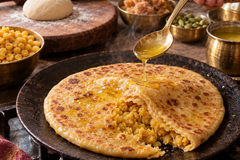
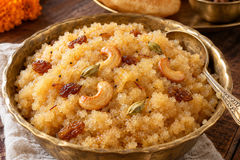
There are some festival plates that children remember almost by smell. The warm ghee, freshly fried poori and a bowl of dark, peppery kaala chana that always appeared beside the halwa during Kanjak. At home, the chana is usually eaten with poori, though a spoonful with halwa somehow ends up on the same plate.
After the children have finished their meal, the prasad is shared around the family, often with everyone reaching for one last poori. Those little dried chickpeas need to be soaked and cooked properly, but before getting to that part, it is useful to know why kaala chana has become such a familiar part of the Kanjak thali.
What Is Kaala Chana and Why Is It Made for Kanjak Pooja?
Kaala chana is the small, dark-skinned chickpea also known as black chickpea or desi chana. It has a firmer skin and a nuttier taste than regular white chickpeas.
For Kanjak and Ashtami bhog, it is commonly prepared as a dry, spiced prasad and served with halwa and poori. It is made for Kanjak pooja because kaala chana forms part of the traditional bhog served during Ashtami and Navami, alongside other familiar foods.
What Ingredients Do You Need for This Simple Kaala Chana Recipe?
This simple kaala chana recipe uses soaked black chickpeas, ghee, cumin and a handful of everyday spices to create the dry, warmly seasoned flavour usually served with Kanjak bhog.
| Ingredient | Quantity |
|---|---|
| Kaala chana | 1 cup |
| Water for soaking | 2½ cups |
| Ghee | 2 tablespoons |
| Cumin seeds | 1 teaspoon |
| Green chilli | 1, finely chopped |
| Coriander powder | 1 teaspoon |
| Cumin powder | 1 teaspoon |
| Red chilli powder | ½ teaspoon |
| Garam masala | ½ teaspoon |
| Black pepper powder | ¼ teaspoon |
| Turmeric powder | ¼ teaspoon |
| Sendha namak | 1 teaspoon or to taste |
| Bay leaf | 1 |
How Do You Soak and Boil the Black Chickpeas Properly?
Soak the black chickpeas overnight, then pressure cook them until they are completely tender and soft inside.
- Rinse 1 cup kaala chana well before soaking.
- Add around 2½ cups of water and leave the chickpeas for 8 to 9 hours or overnight.
- Drain the soaking water and rinse the softened chana once more.
- Transfer them to a pressure cooker with fresh water and cook until tender, checking that there is no hard centre. Use 10 to 12 whistles on medium heat.
- If they are still firm, keep the chana a few more minutes under pressure rather than using it half-cooked.
How Do You Make the No Onion, No Garlic Tempering for Prasad?
A simple ghee tempering with cumin, green chilli and some basic spices gives prasad kaala chana its warm, savoury flavour without onion or garlic.
Start with the Ghee
Heat ghee in a pan and let the cumin seeds crackle. Add the bay leaf and green chilli next, keeping the heat gentle.
Add the Spices
Stir in coriander powder, cumin powder, chilli powder, garam masala, pepper and turmeric. Keep the spices moving for a few seconds so that they do not burn.
Bring in the Chana
Add the boiled black chickpeas and sendha namak. Toss everything together and cook for a few minutes, allowing the spices to coat the chana well before serving.
How Do You Make Dry Sukha Kaala Chana for Ashtami Navami?
Sukha kaala chana is made by cooking the chickpeas until tender, draining off excess moisture and then coating them with a dry spice mix. There is a combination of cumin, turmeric, red chilli, roasted cumin, chaat masala, garam masala, amchur and lemon.
Let the Chana Lose Its Extra Water
Once the boiled chana is ready, drain it well before adding it to the pan. Too much water at this stage can make the spices turn into a loose gravy, which is not what you want here.
Build the Spiced Coating
Heat the oil and let the cumin seeds crackle. Add turmeric and red chilli powder, then follow with roasted cumin powder, chaat masala, garam masala and amchur. Give everything a quick stir.
Finish Without Making It Wet
Add the cooked chana and toss until the spice mixture clings to the chickpeas. Keep the heat moderate and let the extra moisture cook away. A little lemon juice can go in at the end, followed by chopped coriander.
How Do You Serve Kaala Chana With Halwa and Poori for Kanjak?
Serve the warm kaala chana with fresh halwa and poori on the same plate, keeping each preparation separate so the savoury and sweet flavours remain distinct.
- Put a small portion of sukha kaala chana on one side of the plate.
- Add freshly prepared suji halwa beside it.
- Place one or two hot pooris alongside the chana and halwa.
- Serve the meal warm, particularly when it is being prepared as Kanjak or Ashtami bhog.
- Some bhog preparations also include kheer, and thus, it can be added when it is part of your family's usual thali.
What Tips Help You Get Soft Kaala Chana With the Right Texture?
The ideal kaala chana starts with proper soaking, but the cooking stage matters just as much. The chickpeas should be tender all the way through without losing their shape.
- Use fresh black chickpeas where possible. Older chana can take noticeably longer to soften.
- Give the chana enough soaking time. Around 8 to 9 hours or overnight helps soften its firmer outer skin before cooking.
- Do not stop cooking just because the pressure-cooking time is over. Check a chickpea by pressing or biting it. A hard centre means it needs more time.
- Pressure cooking can be extended when the chana is still firm. Cook for another five minutes in case of undercooked chickpeas.
- Pot cooking takes longer. Soaked kala chana can need more than an hour on the stovetop, so allow for that rather than rushing the process.
- Drain well before making the dry prasad version. Excess water can leave the finished chana too soft or wet.
Conclusion
A good Kanjak thali does not need elaborate cooking. Properly soaked and tender kaala chana, lightly spiced and served with warm halwa and poori, makes a simple Ashtami or Navami bhog. Ultimately, a little planning with soaking and cooking time can make the final plate much easier to prepare.