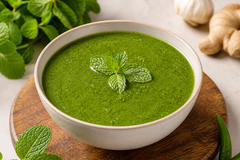
Not every chutney needs coconut or a long list of ingredients to taste amazing. Sometimes, a handful of roasted peanuts can do the job better than anything else in your kitchen. Peanut chutney is one of those quietly brilliant recipes: simple, quick, and packed with flavour.
It has that perfect mix of nuttiness, spice and a slight tang that wakes up even the simplest breakfast. If you've ever wanted a no-fuss chutney recipe that still feels satisfying, this one easily earns its place on your plate.
What Is Peanut Chutney (Groundnut Chutney) & Why It's So Popular
Peanut chutney, or groundnut chutney as many call it, is a regular in a lot of South Indian kitchens. It's that creamy, nutty and slightly spicy side you'll usually find next to soft idlis or crispy dosas on a plate.
In a typical South Indian breakfast, chutneys aren't just extras; they're what bring the whole meal to life. Peanut chutney adds that much-needed moisture, a burst of flavour, and a nice contrast in every bite. This quietly wins people over with its deeper taste and the fact that it lasts longer. It's especially loved in places like Andhra Pradesh and Karnataka, where bold and punchy flavours are part of everyday cooking.
Ingredients and Variations You Can Try
The flexibility of the peanut chutney makes it unique. You can tweak it based on what you have at home or your personal taste.
Basic ingredients:
- Roasted peanuts (the star of the recipe).
- Garlic cloves for a sharp kick.
- Dry red chillies for heat.
- Tamarind for a hint of tang.
- Salt and water for balance.
Popular variations:
- Add a small piece of onion for extra depth.
- Skip garlic if you like a subtle version.
- Use green chillies instead of red for a fresher flavour.
- Mix in a little coconut if you want a softer texture.
Step-by-Step Method: From Roasting To Grinding
Making peanut chutney is surprisingly simple, but a few small steps can make a big difference.
Here's how it usually comes together:
- Start by dry roasting the peanuts on a low flame until they turn aromatic.
- Let them cool, then remove the skins if needed.
- In the same pan, lightly roast the red chillies and garlic.
- Soak a small piece of tamarind in warm water.
Now comes the blending part:
- Add peanuts, chillies, garlic, tamarind and salt to a mixer.
- Pour in a little water and grind until smooth.
- Adjust the water gradually to control the thickness.
If you like a coarse texture, don't over-blend. For a creamy finish, let the mixer run a bit longer. It's really about how you like it.
The Magic Of Tempering (Tadka)
This is where the chutney truly comes alive.
A simple tempering adds aroma and that classic South Indian touch:
- Heat oil in a small pan
- Add mustard seeds and let them crackle
- Toss in fresh curry leaves (be careful, they splutter!)
- Pour this sizzling mix over the chutney
That final step might seem small, but it changes everything. The fragrance, the flavour; it's what makes the chutney feel complete.
What To Serve With Peanut Chutney
Peanut chutney is incredibly versatile. You'll find it pairs well with both traditional and modern dishes.
Best pairings include:
- Soft idli
- Crispy dosa
- Medu vada
- Upma
- Even sandwiches or pakoras
It's one of those sides that quietly fit into almost any meal without trying too hard.
Storage Tips & Shelf Life
If you've made extra (which often happens), storing it properly helps retain the taste.
- Keep it in an airtight container in the fridge
- It usually stays fresh for 2–3 days
- If it thickens, just add a little water before serving
You can also freeze small portions, though fresh chutney always tastes better. Try to make only as much as you need for the best flavour.
Conclusion
Peanut chutney is one of those recipes that proves simple food can be incredibly satisfying. With just a few ingredients and minimal effort, you get a side dish that's rich, flavourful, and endlessly adaptable.
Whether you call it peanut chutney or groundnut chutney, it has a way of becoming a regular in your kitchen once you try it. Play around with flavours, adjust the spice, and make it your own, because that's where the real fun begins.