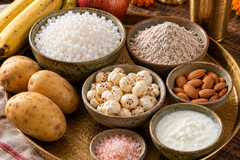
The morning begins with the lighting of the diya; flowers are set beside Maa Durga, and then comes the small but meaningful question: "What will be placed in the bhog thali today?" Navratri prasad changes with the day, with traditional offerings ranging from desi ghee and sugar to kheer, malpua, banana, coconut and sesame seeds. That gives each morning its own preparation, its own aroma and a slightly different place in the nine-day rhythm. The ideas ahead cover simple homemade offerings, a nine-day plan and a few ways to prepare bhog with care.
What Is Navratri Prasad and What Place Does It Have in the Puja?
Navratri prasad is food or an offering placed before the Goddess during worship. Different forms of Navdurga are traditionally associated with different bhog items across the nine days.
- It changes with the day. The offering becomes part of the daily puja, giving each day its own bhog rather than repeating one preparation throughout Navratri.
- Prasad also becomes something to share, so the offering often moves from the puja space to the family once the worship is complete.
Why Is Offering Mataji Prasad Significant During Navratri?
Presenting Mataji prasad is a meaningful part of Navratri worship. Specific bhog items are traditionally related to the nine forms of the Goddess.
- The nine forms of Navdurga are associated with different qualities and aspects of the Goddess, so the bhog follows the character of that day's worship.
- The offering carries a devotional intention. Desi ghee, honey, jaggery and other items are linked with specific days in the traditional sequence.
- The food itself becomes part of the ritual setting, placed before Mataji during the puja instead of being treated as an ordinary meal.
- Families observing Navratri at home prepare the bhog so that the daily worship feels more connected to the traditional Navdurga sequence.
How To Make Navratri Prasad at Home With Simple Sattvic Ingredients?
A simple Navratri prasad recipe can be made at home with a few ingredients such as ghee, jaggery, coconut, milk, fruits and vrat-friendly flours.
- Singhara flour can be cooked with ghee, jaggery and cardamom to make a quick halwa.
- Milk, sabudana and dry fruits can come together in a richer kheer, with cardamom, nutmeg and saffron adding fragrance.
- Coconut, jaggery and ghee can form the base of a simple sweet preparation when you want something quicker than halwa.
- Fruits such as bananas can also be offered without cooking, keeping the bhog fresh and uncomplicated.
- The finished prasad can be prepared shortly before the puja so its texture, aroma and freshness remain at their best.
What Can You Offer as Daily Prasad for Navratri for All Nine Days?
A Navratri bhog can follow a different offering for each form of Navdurga worshipped during the nine days. The traditional sequence includes desi ghee, sugar, kheer, malpua, banana, honey, jaggery, coconut and sesame seeds.
1. Desi Ghee for Maa Shailputri
Navratri starts with an offering of desi ghee to Maa Shailputri. Devotees seek her blessings for strength since the offering is related to the combined power of Brahma, Vishnu and Mahesh.
2. Sugar for Maa Brahmacharini
On the second day, sugar is offered to Maa Brahmacharini. Her worship is connected with perseverance and penance, and hence, the bhog highlights these qualities and the devotion behind them.
3. Kheer for Maa Chandraghanta
Day three brings a bowl of kheer to the bhog. Maa Chandraghanta is worshipped on this day for courage and protection from evil.
4. Malpua for Maa Kushmanda
Malpua finds its place in the bhog on the fourth day, when devotees worship Maa Kushmanda. Her radiant form is known to drive away darkness. The day is also linked with prayers for health and wealth.
5. Banana for Maa Skandamata
A banana is offered to Maa Skandamata on Day 5. She is regarded as the mother of Skanda, and the offering is traditionally associated with prosperity and power.
6. Honey for Maa Katyayani
Honey goes into the bhog on the sixth day for Maa Katyayani. Its traditional association is with controlling anger, using it positively and directing fierce energy towards a constructive purpose.
7. Jaggery for Maa Kalaratri
By Day 7, the offering changes. This fierce form of Goddess Parvati is associated with powerful energy and protection from negativity, and thus, the day's worship gets a distinct character with jaggery for Maa Kalaratri.
8. Coconut for Maa Mahagauri
It is offered to Maa Mahagauri on the eighth day. Devotees traditionally seek her blessings for worldly gains and freedom from sins through this bhog.
9. Sesame Seeds for Maa Siddhidatri
The final day honours Maa Siddhidatri, with sesame seeds offered as prasad and traditionally linked with the attainment of different Siddhis through her blessings.
How to Make Quick Navratri Prasad Recipes Like Sheera, Panjiri and Coconut Ladoo?
A simple daily prasad for Navratri can come together with a few pantry staples, especially when you need something fresh without spending hours in the kitchen.
Sheera
Roast semolina in ghee until fragrant, then add water or milk gradually. Stir in sugar and cardamom and cook until the mixture thickens.
Panjiri
Roast the flour gently in ghee, then mix in sugar and chopped nuts. Keep the texture slightly crumbly rather than making it into a paste.
Coconut Ladoo
Combine grated coconut with a sweet base, cook until the mixture comes together and let it cool slightly. Roll into small ladoos and finish with a little extra coconut or chopped nuts.
How Should You Prepare and Present the Navratri Bhog Thali?
Take a clean thali and arrange each bhog item in its own portion. Then, keep the main prasad in a place where it can be presented to Mataji easily. Finally, fruits or any other items related to that day can go alongside it before the puja proceeds.
How Can You Keep Navratri Prasad Pure and Fresh?
Fresh ingredients and clean preparation make a difference when preparing prasad. Cook it close to puja time where possible; keep it covered and refrigerate anything that may spoil if it needs to be stored.
- Wash fruits and other ingredients well before using them.
- Use clean utensils for cooking and serving the prasad.
- Keep milk-based sweets with other perishable items covered and refrigerated.
- Transfer the finished prasad into clean bowls or the puja thali shortly before offering it to Mataji.
Conclusion
Navratri becomes more meaningful when each offering is prepared with care and presented with devotion. From simple homemade sweets to the Navratri prasad for nine days, these bhog ideas can help families plan each day's offering while keeping the food fresh, pure and suited to the occasion.